

 Open in the Field Guide
We all need a Savior
“For all have sinned and fall short of the glory of God.”
Romans 3:23 (BSB)
None of us can earn our way to God by being good enough. We all need mercy.
 Field Guide · Plants and flowers
Rosa multiflora

Its prickly stems can scratch or snag skin and clothing.
Multiflora rose is a thorny shrub native to China, Japan, and Korea. In North America, it often forms dense thickets along forest edges, roadsides, and fields, where it is considered invasive.
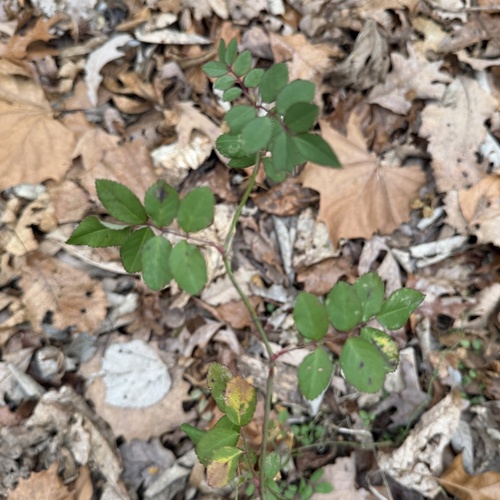
 How to recognize it
Look for clusters of small white flowers and compound leaves with fringed stipules at the base of each leaf stalk. The fringed stipules help distinguish it from the similar roses listed; rugosa rose also has notably wrinkled leaves and larger flowers.
 In lavender fields
It can invade garden edges near lavender plantings, but it is not a lavender companion plant.
 When to see it
Multiflora Rose is seen most often in May, Jun. There are 119557 public records of it worldwide.
 Often recorded near
Public records show Multiflora Rose most often in the areas around these farms and places:
Seen one? Point the Lavender Passport Field Guide at it and add your find.
 Questions
It’s seen most often in May, Jun.
Public records show it most often around Blooming Hill Lavender Farm & Gift Shop, Breaux Estate Vineyards, Chrysalis Wine, Goodstone Inn & Restaurant, Permund Cellars.
Look for clusters of small white flowers and compound leaves with fringed stipules at the base of each leaf stalk. The fringed stipules help distinguish it from the similar roses listed; rugosa rose also has notably wrinkled leaves and larger flowers.
Its prickly stems can scratch or snag skin and clothing.










You may also like

Here to help while we’re tending the farm