

 Open in the Field Guide
We all need a Savior
“For all have sinned and fall short of the glory of God.”
Romans 3:23 (BSB)
None of us can earn our way to God by being good enough. We all need mercy.
 Field Guide · Other wildlife
Nerodia sipedon

It is not venomous, but may bite if handled.
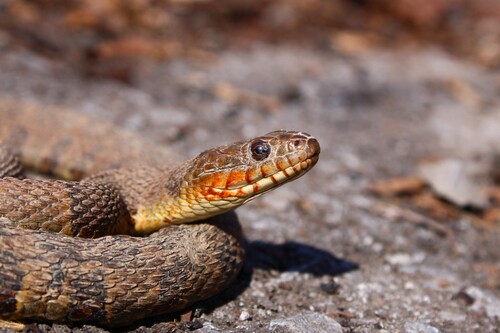
The northern watersnake is a nonvenomous snake native to eastern and central North America. It lives near ponds, lakes, rivers, and other freshwater habitats, where it hunts fish and amphibians.
 How to recognize it
It has keeled scales and dark bands near the neck that change into blotches farther down the body; its color often darkens with age. Compared with the listed watersnakes, its pattern is usually less diamond-shaped than that of the diamondback watersnake and less uniformly banded than that of the banded watersnake, though patterns can overlap.
 When to see it
Northern Watersnake is seen most often in May, Jun. There are 85064 public records of it worldwide.
 Often recorded near
Public records show Northern Watersnake most often in the areas around these farms and places:
Seen one? Point the Lavender Passport Field Guide at it and add your find.
 Questions
It’s seen most often in May, Jun.
Public records show it most often around 12 Corners Vineyards, Contessa Wine Cellars, Dablon Vineyards & Winery, Froehlich's, Fruit Acres Farm Market & U-Pick.
It has keeled scales and dark bands near the neck that change into blotches farther down the body; its color often darkens with age. Compared with the listed watersnakes, its pattern is usually less diamond-shaped than that of the diamondback watersnake and less uniformly banded than that of the banded watersnake, though patterns can overlap.
It is not venomous, but may bite if handled.















You may also like

Here to help while we’re tending the farm