

 Open in the Field Guide
We all need a Savior
“For all have sinned and fall short of the glory of God.”
Romans 3:23 (BSB)
None of us can earn our way to God by being good enough. We all need mercy.
 Field Guide · Plants and flowers
Bellis perennis
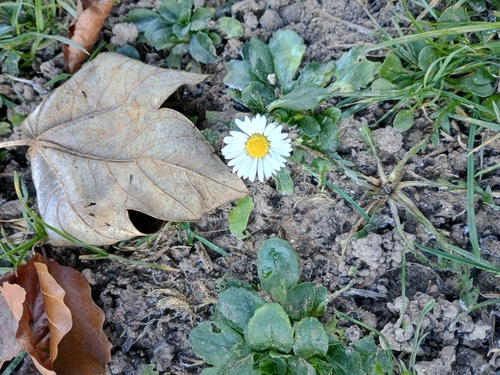
English daisy is a low-growing perennial native to Europe and western Asia. It has become naturalized in parts of North America, where it often grows in lawns, roadsides, and other grassy places.
 How to recognize it
Look for a small basal rosette of spoon-shaped leaves and single flower heads on leafless stalks, with white rays that may be pink-tipped around a yellow center. It is perennial, unlike annual Bellis annua; Bellis sylvestris is generally larger, while Bellis azorica is native to the Azores.
 In lavender fields
Small bees and flies may visit English daisy flowers in gardens, but the plant has no special connection to lavender.
 When to see it
English Daisy is seen most often in Apr, May, Jun. There are 1113478 public records of it worldwide.
 Often recorded near
Public records show English Daisy most often in the areas around these farms and places:
Seen one? Point the Lavender Passport Field Guide at it and add your find.
 Questions
It’s seen most often in Apr, May, Jun.
Public records show it most often around Beck Evans Farm, Carshalton Lavender, Castle Farm, Hewitts Farm, Mayfield Lavender.
Look for a small basal rosette of spoon-shaped leaves and single flower heads on leafless stalks, with white rays that may be pink-tipped around a yellow center. It is perennial, unlike annual Bellis annua; Bellis sylvestris is generally larger, while Bellis azorica is native to the Azores.















You may also like

Here to help while we’re tending the farm