

 Open in the Field Guide
We all need a Savior
“For all have sinned and fall short of the glory of God.”
Romans 3:23 (BSB)
None of us can earn our way to God by being good enough. We all need mercy.
 Field Guide · Birds
Anas platyrhynchos

A mallard may peck or bite if cornered or handled.
The mallard is a common dabbling duck found across much of North America. It lives in wetlands and other waters, including ponds, marshes, and lakes, and eats water plants and small animals.
 How to recognize it
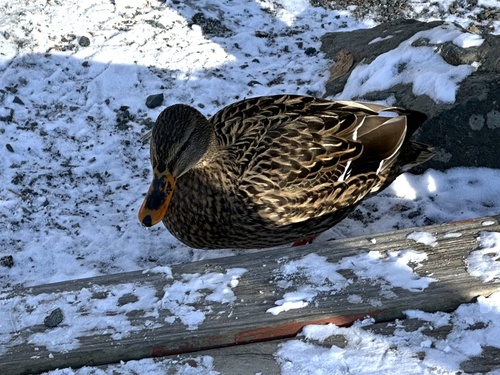
Males have a glossy green head, yellow bill, and gray body; females are mottled brown with an orange-and-dark bill. It is larger and less slender than the green-winged teal or northern pintail, while the darker American black duck and Pacific black duck lack the male mallard’s green head.
 When to see it
Mallard is seen most often in Jan, Mar, Apr, May. There are 32836939 public records of it worldwide.
 Often recorded near
Public records show Mallard most often in the areas around these farms and places:
Seen one? Point the Lavender Passport Field Guide at it and add your find.
 Questions
It’s seen most often in Jan, Mar, Apr, May.
Public records show it most often around Chilliwack River Valley Natural Honey, Creekside Cheese + Creamery, Greendale Acres, Harrison Lavender, Heritage Barn.
Males have a glossy green head, yellow bill, and gray body; females are mottled brown with an orange-and-dark bill. It is larger and less slender than the green-winged teal or northern pintail, while the darker American black duck and Pacific black duck lack the male mallard’s green head.
A mallard may peck or bite if cornered or handled.















You may also like

Here to help while we’re tending the farm