

 Open in the Field Guide
We all need a Savior
“For all have sinned and fall short of the glory of God.”
Romans 3:23 (BSB)
None of us can earn our way to God by being good enough. We all need mercy.
 Field Guide · Mammals
Sciurus griseus

It may bite if cornered or handled, so do not approach or feed it.
The western gray squirrel is a tree-dwelling rodent native to the western United States, especially oak and conifer woodlands from Washington through California. It also occurs in parts of Baja California, Mexico.
 How to recognize it
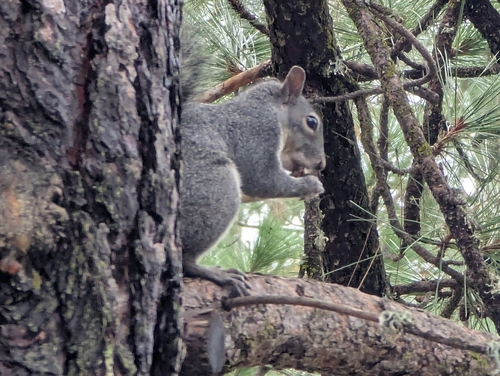
It has gray fur, a pale underside, and a large bushy tail edged with white. Unlike the reddish Eurasian red squirrel, it lacks ear tufts; it is generally grayer than the fox squirrel and the eastern gray squirrel.
 When to see it
Western Gray Squirrel is seen most often in Jan, Mar, Apr, May, Jun, Jul, Aug, Sep, Oct, Nov. There are 19331 public records of it worldwide.
 Often recorded near
Public records show Western Gray Squirrel most often in the areas around these farms and places:
Seen one? Point the Lavender Passport Field Guide at it and add your find.
 Questions
It’s seen most often in Jan, Mar, Apr, May, Jun, Jul, Aug, Sep, Oct, Nov.
Public records show it most often around B.R. Cohn Winery, Beaulieu Vineyard, Bees N Blooms, Chimney Rock Winery, Clif Family Winery.
It has gray fur, a pale underside, and a large bushy tail edged with white. Unlike the reddish Eurasian red squirrel, it lacks ear tufts; it is generally grayer than the fox squirrel and the eastern gray squirrel.
It may bite if cornered or handled, so do not approach or feed it.















You may also like

Here to help while we’re tending the farm