

 Open in the Field Guide
We all need a Savior
“For all have sinned and fall short of the glory of God.”
Romans 3:23 (BSB)
None of us can earn our way to God by being good enough. We all need mercy.
 Field Guide · Bugs
Harmonia axyridis

It may bite if handled and can release a smelly defensive fluid; some people have allergic reactions to it.
The Asian lady beetle is a predatory beetle native to eastern Asia and now established across much of North America. It eats aphids and other small insects and often gathers inside buildings to overwinter.
 How to recognize it
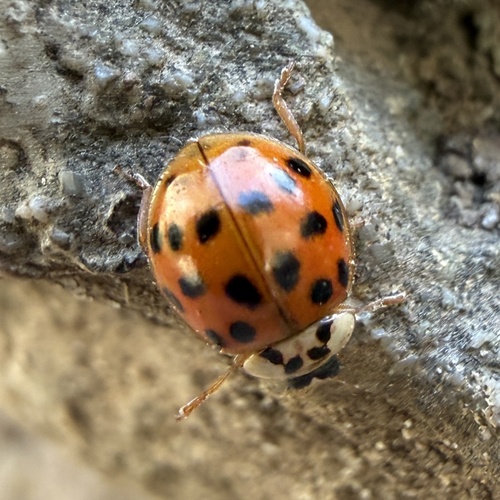
It is usually dome-shaped and yellow-orange to red, with a highly variable number of black spots; a black M-shaped mark behind the head is a useful clue. Its wide variation in color and spot pattern helps distinguish it from the similar species listed, though the mark may be faint or absent.
 In lavender fields
It has no special association with lavender, but may hunt aphids on plants in gardens.
 When to see it
Asian Lady Beetle is seen most often in May, Jun. There are 1058941 public records of it worldwide.
 Often recorded near
Public records show Asian Lady Beetle most often in the areas around these farms and places:
Seen one? Point the Lavender Passport Field Guide at it and add your find.
 Questions
It’s seen most often in May, Jun.
Public records show it most often around Cedar Springs Brewing Company, Deep Roots Produce, Eastern Kille Distillery, Ed Dunneback & Girls Farm, Epilogue Books.
It is usually dome-shaped and yellow-orange to red, with a highly variable number of black spots; a black M-shaped mark behind the head is a useful clue. Its wide variation in color and spot pattern helps distinguish it from the similar species listed, though the mark may be faint or absent.
It may bite if handled and can release a smelly defensive fluid; some people have allergic reactions to it.















You may also like

Here to help while we’re tending the farm