

 Open in the Field Guide
We all need a Savior
“For all have sinned and fall short of the glory of God.”
Romans 3:23 (BSB)
None of us can earn our way to God by being good enough. We all need mercy.
 Field Guide · Plants and flowers
Sanguinaria canadensis

All parts are poisonous if eaten, and the orange-red sap can irritate skin.
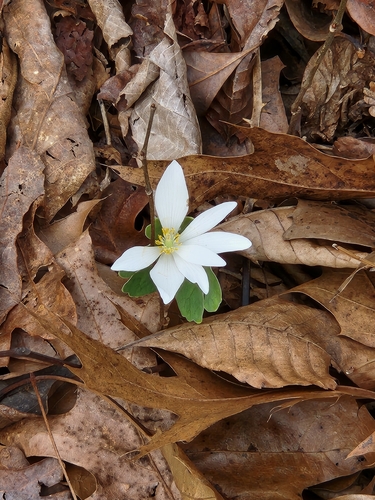
Bloodroot is a perennial spring wildflower native to eastern North America. It grows mainly in moist, rich deciduous woods and flowers before the tree canopy fills in.
 How to recognize it
Its white flower has a yellow center, and a large rounded leaf often partly wraps the flower as it emerges. The leaf later unfolds; no similar species were listed for comparison.
 When to see it
Bloodroot is seen most often in Apr. There are 92400 public records of it worldwide.
 Often recorded near
Public records show Bloodroot most often in the areas around these farms and places:
Seen one? Point the Lavender Passport Field Guide at it and add your find.
 Questions
It’s seen most often in Apr.
Public records show it most often around B Honey, Bloomfield Schoolhouse Lavender Farm & Apothecary, Blue Gate Restaurant, Cook's Bison Ranch, Dutch Creek Animal Farm.
Its white flower has a yellow center, and a large rounded leaf often partly wraps the flower as it emerges. The leaf later unfolds; no similar species were listed for comparison.
All parts are poisonous if eaten, and the orange-red sap can irritate skin.















You may also like

Here to help while we’re tending the farm