

 Open in the Field Guide
We all need a Savior
“For all have sinned and fall short of the glory of God.”
Romans 3:23 (BSB)
None of us can earn our way to God by being good enough. We all need mercy.
 Field Guide · Plants and flowers
Rhamnus cathartica

Eating the berries can cause vomiting and diarrhea.
Common buckthorn is a deciduous shrub or small tree native to Europe, northwest Africa, and western Asia. Introduced to North America as an ornamental, it has become invasive in parts of the northern United States and Canada.
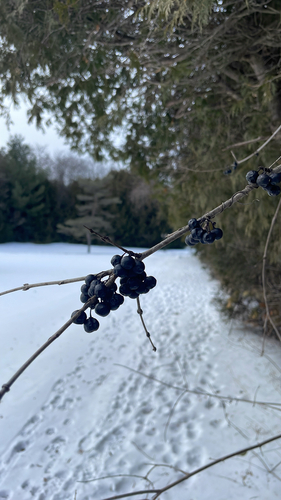
 How to recognize it
Look for small toothed leaves usually arranged in opposite or nearly opposite pairs and a sharp spine at the tip of many twigs; these features help distinguish it from the related species listed, which generally have alternate leaves.
 When to see it
Common Buckthorn is seen most often in May, Jun, Jul, Aug, Sep. There are 293892 public records of it worldwide.
 Often recorded near
Public records show Common Buckthorn most often in the areas around these farms and places:
Seen one? Point the Lavender Passport Field Guide at it and add your find.
 Questions
It’s seen most often in May, Jun, Jul, Aug, Sep.
Public records show it most often around Cedar Springs Brewing Company, Deep Roots Produce, Eastern Kille Distillery, Ed Dunneback & Girls Farm, Epilogue Books.
Look for small toothed leaves usually arranged in opposite or nearly opposite pairs and a sharp spine at the tip of many twigs; these features help distinguish it from the related species listed, which generally have alternate leaves.
Eating the berries can cause vomiting and diarrhea.















You may also like

Here to help while we’re tending the farm