

 Open in the Field Guide
We all need a Savior
“For all have sinned and fall short of the glory of God.”
Romans 3:23 (BSB)
None of us can earn our way to God by being good enough. We all need mercy.
 Field Guide · Plants and flowers
Plantago lanceolata

Its pollen can trigger seasonal allergies in some people.
English plantain is a low-growing perennial herb native to Eurasia and now common across North America. It grows in lawns, fields, roadsides, and other disturbed or compacted ground.
 How to recognize it
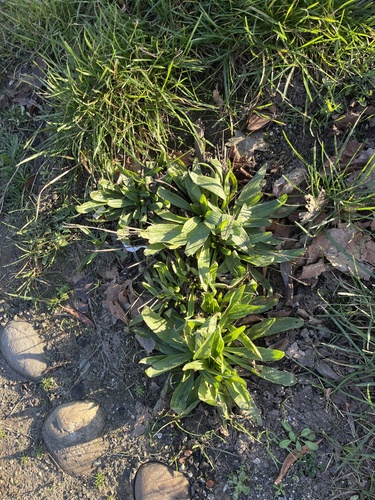
Look for a rosette of narrow leaves with several strong lengthwise ribs and leafless stalks topped by short, dense flower spikes. Its leaves are much narrower than those of Plantago major, while Plantago coronopus has deeply divided leaves and Plantago maritima typically has fleshy leaves.
 In lavender fields
It may grow as a weed in garden or lawn areas near lavender, but it has no notable special relationship with lavender.
 When to see it
English Plantain is seen most often in May, Jun, Jul, Aug. There are 1950750 public records of it worldwide.
 Often recorded near
Public records show English Plantain most often in the areas around these farms and places:
Seen one? Point the Lavender Passport Field Guide at it and add your find.
 Questions
It’s seen most often in May, Jun, Jul, Aug.
Public records show it most often around DeBuck's Family Farm, Erie Orchards and Cider Mills, Gust Brothers Pumpkin Farm, Gust Flower & Produce Farm, Lavender Lane Farm.
Look for a rosette of narrow leaves with several strong lengthwise ribs and leafless stalks topped by short, dense flower spikes. Its leaves are much narrower than those of Plantago major, while Plantago coronopus has deeply divided leaves and Plantago maritima typically has fleshy leaves.
Its pollen can trigger seasonal allergies in some people.















You may also like

Here to help while we’re tending the farm