

 Open in the Field Guide
We all need a Savior
“For all have sinned and fall short of the glory of God.”
Romans 3:23 (BSB)
None of us can earn our way to God by being good enough. We all need mercy.
 Field Guide · Plants and flowers
Frangula alnus

Eating the berries can cause nausea, vomiting, or diarrhea, so do not eat them.
Glossy buckthorn is a thornless, deciduous shrub or small tree native to Europe, northern Africa, and western Asia. It is also naturalized in eastern North America, where it can spread in shaded forests and displace native plants.
 How to recognize it
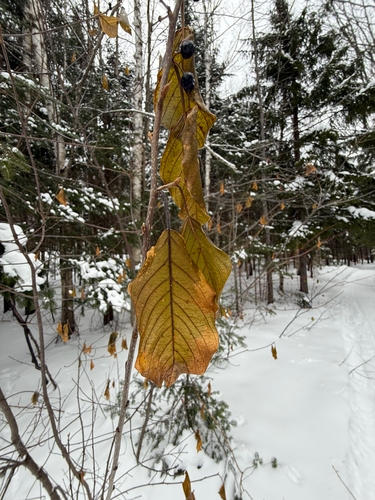
Look for alternate, smooth-edged leaves with many prominent, nearly parallel side veins; the berries turn from red to dark purple or black as they ripen. Its leaves are deciduous, unlike the often evergreen leaves of California coffeeberry, and are not sharply toothed like those of cascara buckthorn.
 When to see it
Glossy Buckthorn is seen most often in Jun, Jul, Aug. There are 636794 public records of it worldwide.
 Often recorded near
Public records show Glossy Buckthorn most often in the areas around these farms and places:
Seen one? Point the Lavender Passport Field Guide at it and add your find.
 Questions
It’s seen most often in Jun, Jul, Aug.
Public records show it most often around Anchored Roots Vineyard & Winery, Door Peninsula Winery, Harbor Ridge Winery, Inn at Cedar Crossing and Cedar Crossing Restaurant & Bar, The Little Harbor Sturgeon Bay, Wisconsin.
Look for alternate, smooth-edged leaves with many prominent, nearly parallel side veins; the berries turn from red to dark purple or black as they ripen. Its leaves are deciduous, unlike the often evergreen leaves of California coffeeberry, and are not sharply toothed like those of cascara buckthorn.
Eating the berries can cause nausea, vomiting, or diarrhea, so do not eat them.















You may also like

Here to help while we’re tending the farm