

 Open in the Field Guide
We all need a Savior
“For all have sinned and fall short of the glory of God.”
Romans 3:23 (BSB)
None of us can earn our way to God by being good enough. We all need mercy.
 Field Guide · Plants and flowers
Arisaema triphyllum

Do not eat it: raw plant parts contain irritating crystals that can cause intense burning and swelling in the mouth and throat.
Jack-in-the-pulpit is a woodland wildflower native to eastern North America. It grows in moist, often shaded forests and usually blooms in spring.
 How to recognize it
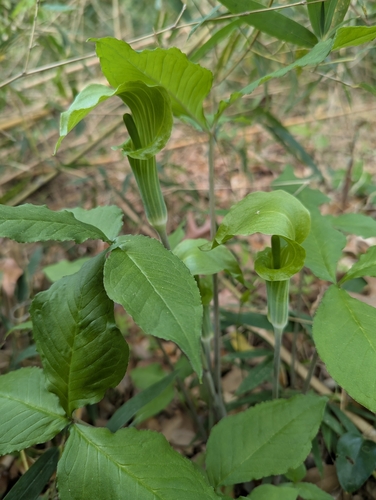
Look for a hooded, often striped flower surrounding a small upright spike, with a single leaf stalk bearing three leaflets. Unlike green dragon (Arisaema dracontium), its spike usually stays inside the hood rather than extending beyond it.
 When to see it
Jack-in-the-Pulpit is seen most often in May. There are 86096 public records of it worldwide.
 Often recorded near
Public records show Jack-in-the-Pulpit most often in the areas around these farms and places:
Seen one? Point the Lavender Passport Field Guide at it and add your find.
 Questions
It’s seen most often in May.
Public records show it most often around Elora Brewing Company, Elora Distilling Company, Purple Blossom Lavender Farm, Strom's Farm & Bakery, Terre Bleu.
Look for a hooded, often striped flower surrounding a small upright spike, with a single leaf stalk bearing three leaflets. Unlike green dragon (Arisaema dracontium), its spike usually stays inside the hood rather than extending beyond it.
Do not eat it: raw plant parts contain irritating crystals that can cause intense burning and swelling in the mouth and throat.















You may also like

Here to help while we’re tending the farm