

 Open in the Field Guide
We all need a Savior
“For all have sinned and fall short of the glory of God.”
Romans 3:23 (BSB)
None of us can earn our way to God by being good enough. We all need mercy.
 Field Guide · Plants and flowers
Rhus typhina
Staghorn sumac is a deciduous shrub or small tree native to eastern North America. It commonly grows in sunny, open places such as fields, roadsides, and forest edges.
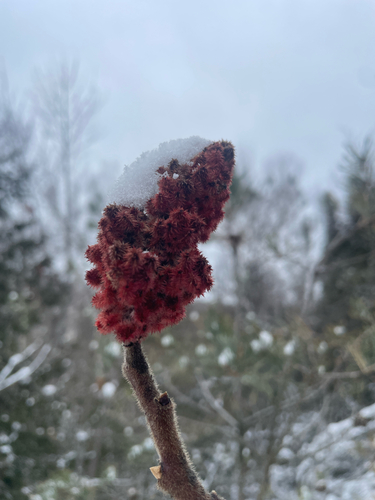
 How to recognize it
Look for fuzzy, antlerlike young branches, large leaves made up of many leaflets, and dense red fruit clusters. Smooth sumac has hairless branches, winged sumac has a leafy strip along the leaf stem, and aromatic sumac has three leaflets; these features help distinguish them from staghorn sumac.
 When to see it
Staghorn Sumac is seen most often in Jul, Aug, Sep. There are 125573 public records of it worldwide.
 Often recorded near
Public records show Staghorn Sumac most often in the areas around these farms and places:
Seen one? Point the Lavender Passport Field Guide at it and add your find.
 Questions
It’s seen most often in Jul, Aug, Sep.
Public records show it most often around Cassis Monna & Filles, Chocolaterie de l'Île d'Orléans, Cidrerie Verger Bilodeau et Distillerie, Confiturerie Tigidou, Ferme Jean-Pierre Plante.
Look for fuzzy, antlerlike young branches, large leaves made up of many leaflets, and dense red fruit clusters. Smooth sumac has hairless branches, winged sumac has a leafy strip along the leaf stem, and aromatic sumac has three leaflets; these features help distinguish them from staghorn sumac.















You may also like

Here to help while we’re tending the farm